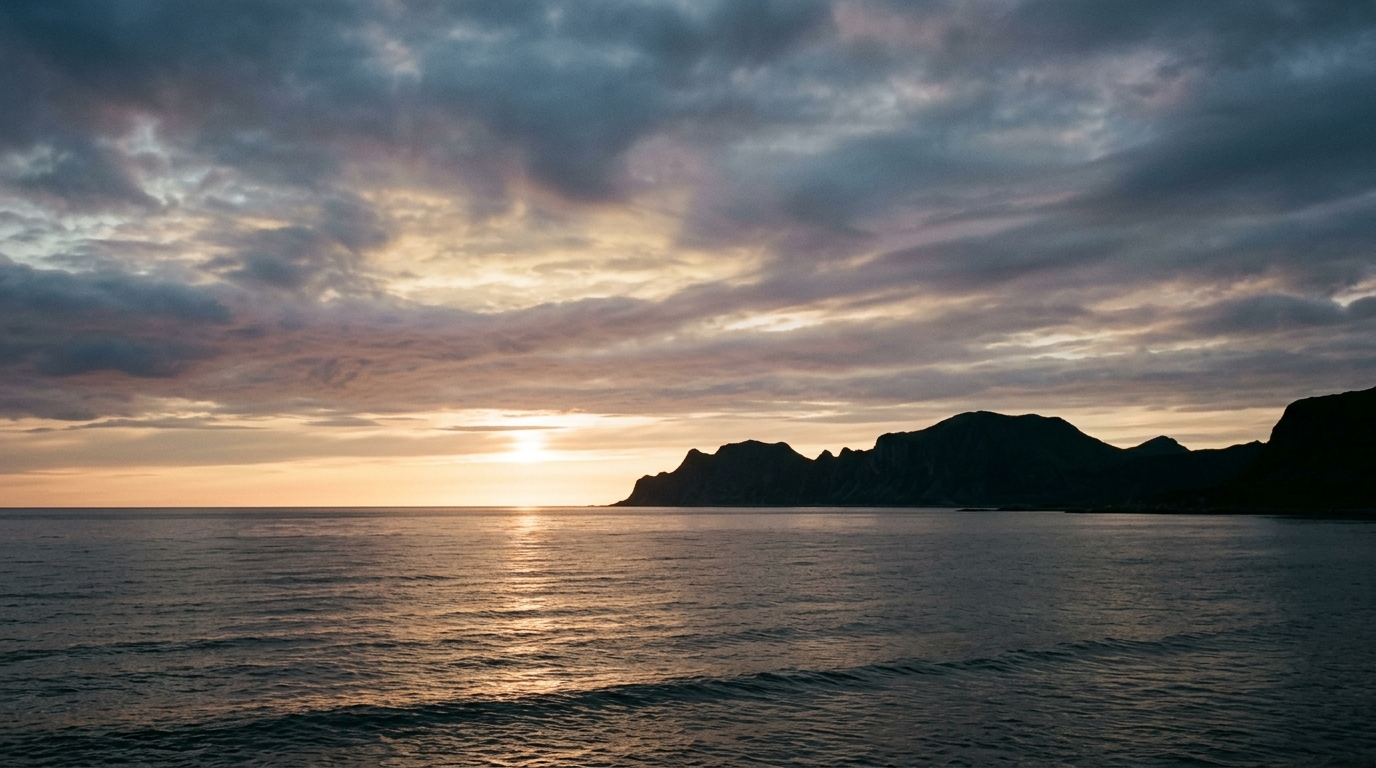
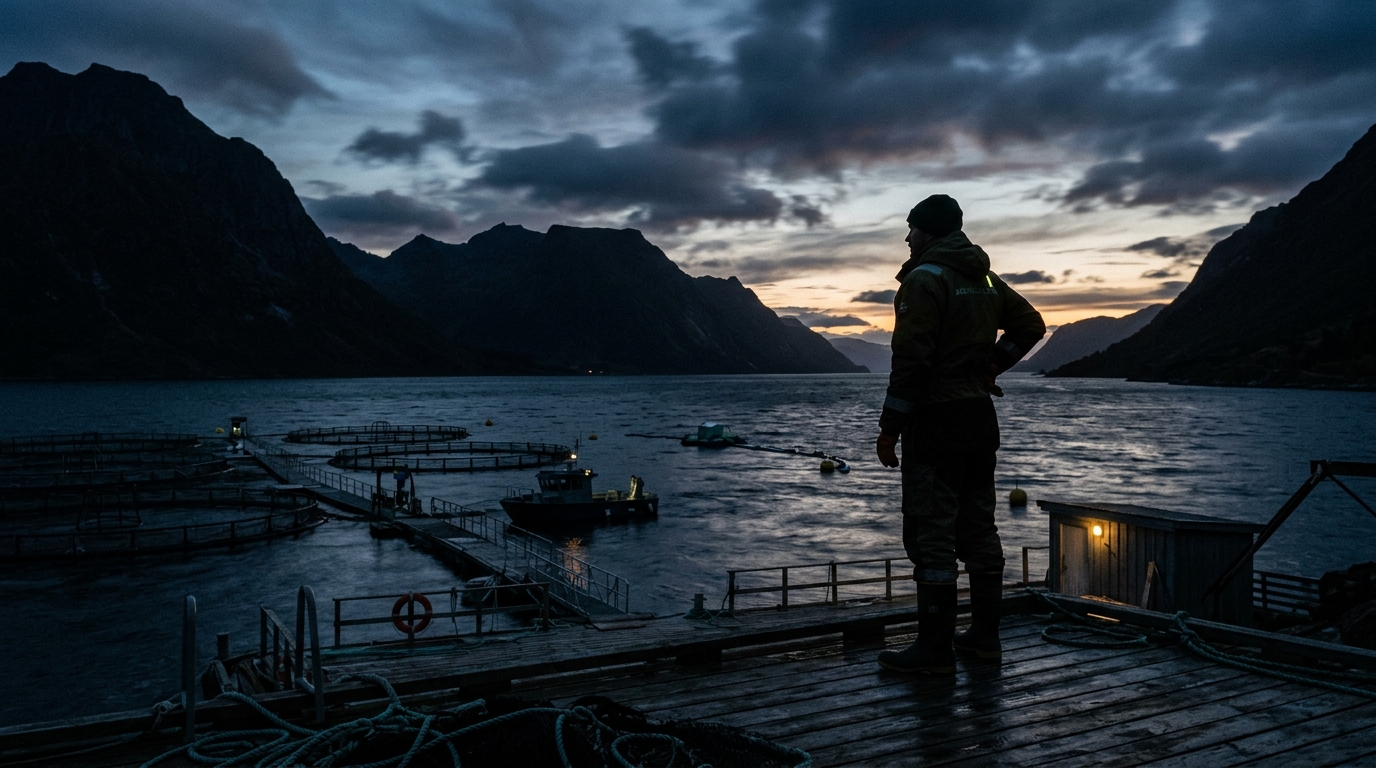
At 02:30 on a July morning on Frøya, the sky is not dark. It is a dim grey-blue that reads more like early morning than night, and your body does not know what to do with it. After a few weeks of this, the confusion compounds. Sleep shifts later than you intend. Energy peaks at strange hours. Appetite reorganises itself around light cues that no longer map to a clock.
This is not a complaint. It is a physiological reality that anyone training seriously in coastal Trøndelag in July will either account for or get surprised by.
What Actually Happens
Extended daylight suppresses melatonin production. Not entirely, but enough to push your natural sleep onset later than your schedule allows. Combined with the physical demands of summer work or training, you end up with a sleep deficit that accumulates quietly. You feel functional, but your recovery markers are sliding.
The energy pattern also shifts. Many people report higher energy in the evening during midsummer, which sounds useful until it means you are training at 21:00 and struggling to sleep by midnight even with full blackout.
The practical problem is not the light itself. It is the mismatch between your body's light-driven rhythms and the demands of a normal schedule.
Four Anchors for Training in Extended Light
1. Set a fixed sleep onset time and protect it. Pick a time, say 22:00 or 22:30, and treat it as non-negotiable for the season. The summer light will try to push it later. Do not let it. Blackout curtains and a consistent wind-down routine are the mechanism here, not willpower.
2. Move your main training session to morning. If you have flexibility, morning sessions in midsummer are the most reliable anchor. Light is not an issue at 06:00, the body is fresh from whatever sleep it got, and the session is done before the day's demands can eliminate it.
3. Use the evening light for low-intensity outdoor work. Long, light evenings are good for walking, easy runs, and recovery sessions. Not maximal effort. The body's performance curve in midsummer often peaks mid-morning. Evening sessions are best kept aerobic and low-stress.
4. Watch the caffeine cutoff. Standard advice is no caffeine after 14:00. In midsummer on the coast, with a body already struggling to wind down, consider moving that to 12:00. Caffeine plus suppressed melatonin plus extended light is a reliable recipe for poor sleep.
An Honest Note on Using This
These anchors only work if you apply them before your sleep pattern has already shifted two hours late. The most common mistake is noticing the problem in week four and trying to correct from a deficit. Start at the beginning of the period, not when things have already gone sideways.
Frøya in July is genuinely something. The light, the pace of the season, the physical demands of the work. Worth adapting to properly.
Original request: SIGNAL article brief — midnight sun training Frøya July