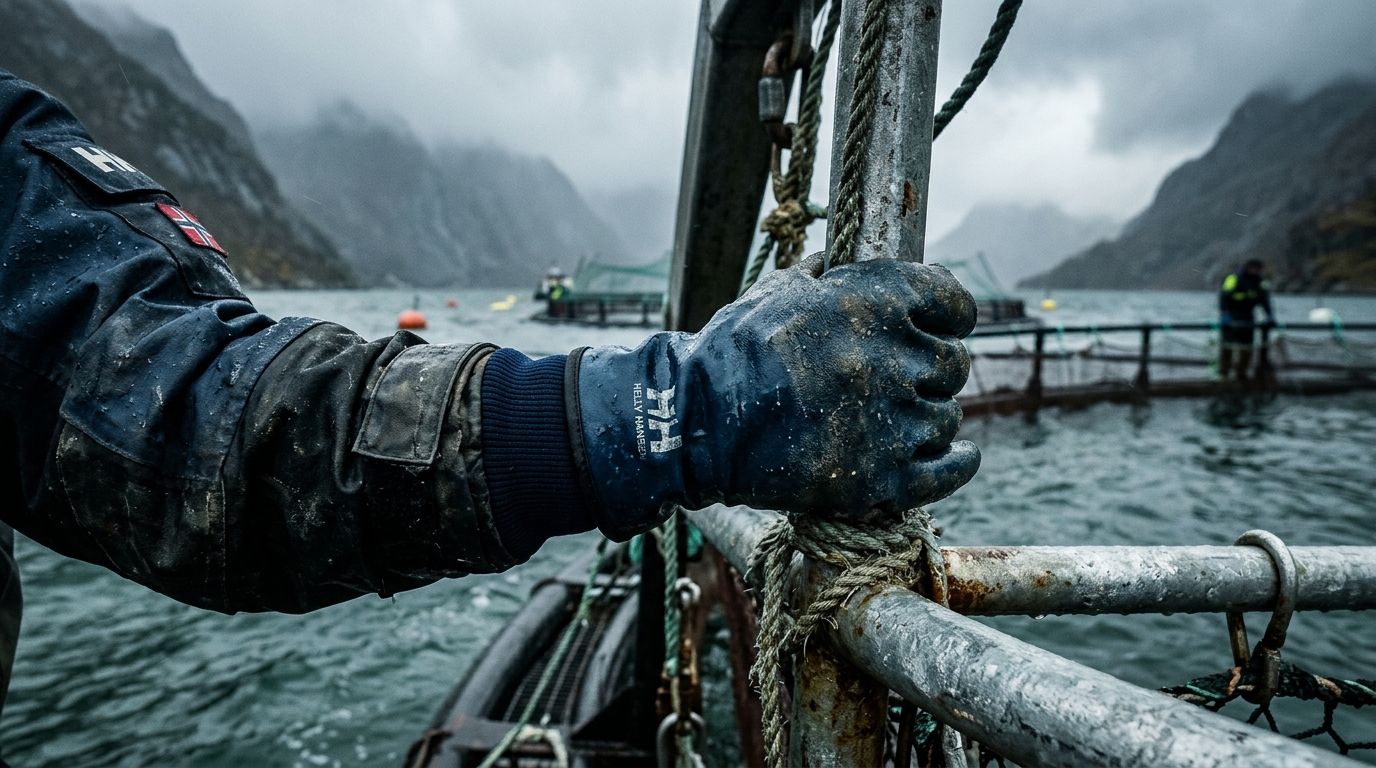
If you work on a Norwegian fish farm, a processing floor, or a logistics yard in Trøndelag, your body is carrying a load that most fitness and health advice was never written to address.
Cold air, wet conditions, repetitive lifting, gripping, bending, and twisting across shifts that run longer in peak season. It is not dramatic. It does not feel like injury. Most days it just feels like work. That is exactly what makes it dangerous over time.
Research into musculoskeletal symptoms among seafood production workers in North Norway found symptoms in the majority of workers. The highest prevalence was in wrist and hand complaints, particularly among salmon industry workers. Cold work was identified as a significant risk factor, not a background condition. The combination of sustained cold exposure and repetitive load is a driver of joint damage that accumulates quietly over years.
The condition it leads to, in many cases, is osteoarthritis.
What osteoarthritis actually is
Osteoarthritis is not just "bad joints." It is the gradual breakdown of cartilage, the tissue that cushions the ends of bones where they meet. Once cartilage is worn, it does not regenerate. The loss is permanent.
What causes it to progress faster in some people than others comes down to a small number of factors: age, genetics, previous injury, and above all, the type and volume of load placed on joints over time. Repetitive movement under load is one of the most consistent drivers. Cold environments accelerate that process through several mechanisms. Blood flow to the extremities drops. The fluid that lubricates joints becomes thicker and less effective. Muscle tension increases, transferring more mechanical stress directly onto cartilage rather than absorbing it in the surrounding tissue.
Put those two things together, sustained cold exposure and daily repetitive physical work, and you have the exact occupational profile that researchers studying Norwegian seafood workers have flagged as high risk.
Why it does not feel like a problem yet
Most of the aquaculture workers facing the highest long-term risk are in their 20s and 30s. At that age, the body compensates well. The early signs of cartilage wear do not produce significant pain. Stiffness after a long shift feels like tiredness. A sore wrist or knee after a heavy day feels like a normal physical cost of the job.
It is. For now.
The problem is that cartilage damage works on a long delay. The wear that happens between 25 and 35 often does not produce significant symptoms until 40 to 50. By then, the pattern of damage is established and the options narrow considerably. Treatment at that stage is management, not reversal.
The window where intervention changes outcomes is the window most workers do not know they are in.
What cold actually does inside the joint
When the air temperature is low and the work is wet, the body pulls blood flow away from the extremities to protect core temperature. That is normal physiology. The cost is reduced circulation to the hands, wrists, knees, and shoulders. Less blood flow means less delivery of the nutrients and oxygen that joint tissue depends on to stay healthy under load.
The synovial fluid inside joints also becomes thicker in cold conditions. That fluid exists to lubricate movement and reduce friction between surfaces. When it thickens, the lubrication is less effective and the mechanical friction increases. Across a full shift in cold conditions, that difference in friction adds up.
Muscle tissue that is cold is also tighter and less elastic. Tight muscles do not absorb impact and load the way warm, elastic muscle does. More of the mechanical energy from each movement gets transferred to the joint itself. Over thousands of repetitions in a working day, this is not a small difference.
What you can actually do about it
None of this means the work is impossible to sustain. It means the work requires a specific kind of physical preparation and recovery that most people in these jobs have never been given.
Warm up before the first shift. Not a ten-minute jog. A targeted 5-7 minute warm-up that takes wrists, hands, shoulders, hips, and knees through their full range of movement. Cold joints going straight into repetitive load under cold conditions is where the damage begins. Breaking that pattern costs seven minutes. Not warming up costs the next twenty years.
Protect the hands and wrists specifically. Gloves designed for cold wet environments reduce the temperature drop at the extremities. They do not eliminate it, but they reduce the severity of vasoconstriction. For workers in salmon processing or grading, this is the joint region under the most direct risk.
Load variation matters as much as load reduction. Exactly the same repetitive pattern across an entire shift is more damaging than varied movement at the same total volume. Where you have any control over task rotation, use it. Alternating gripping tasks with tasks that use different muscle groups and different joint angles reduces the repetitive strain on any single region.
Recovery after cold exposure is not optional. Active warming after a cold shift, gentle movement to restore circulation, and time before the next cold exposure are not luxuries. They are maintenance. A body that goes from cold work straight to rest in a cold environment does not recover the same way as one that warms and moves deliberately first. This is directly connected to what we cover at TLE in why recovery is the training and in the energy budget.
Sleep is where joint repair happens. Growth hormone released during deep sleep is involved in cartilage maintenance and repair. People running on compressed sleep over a production season are reducing their own repair window at the exact time they need it most. The earlier piece on aquaculture worker summer fatigue covers the minimal-viable protocol when the recovery window shrinks.
The conversation worth having
If you are doing this kind of work and reading this, you are ahead of most of your colleagues simply by knowing the risk exists. What you do with that information is yours to decide.
Some of it is individual. The warm-up, the gloves, the recovery protocol. You can start those today without asking anyone's permission.
Some of it is structural. Programs that give aquaculture workers access to targeted physical conditioning, joint mobility work, and occupational health guidance are not common. They exist in some industries, but not widely in Norwegian aquaculture yet. If your workplace does not offer them, you are not alone. That gap is something unions, health and safety representatives, and forward-thinking operations managers have the standing to close.
The body you are building your career on does not come with a replacement plan. The wear happening now is real. The window to change its trajectory is open. That is the honest version of where things stand.