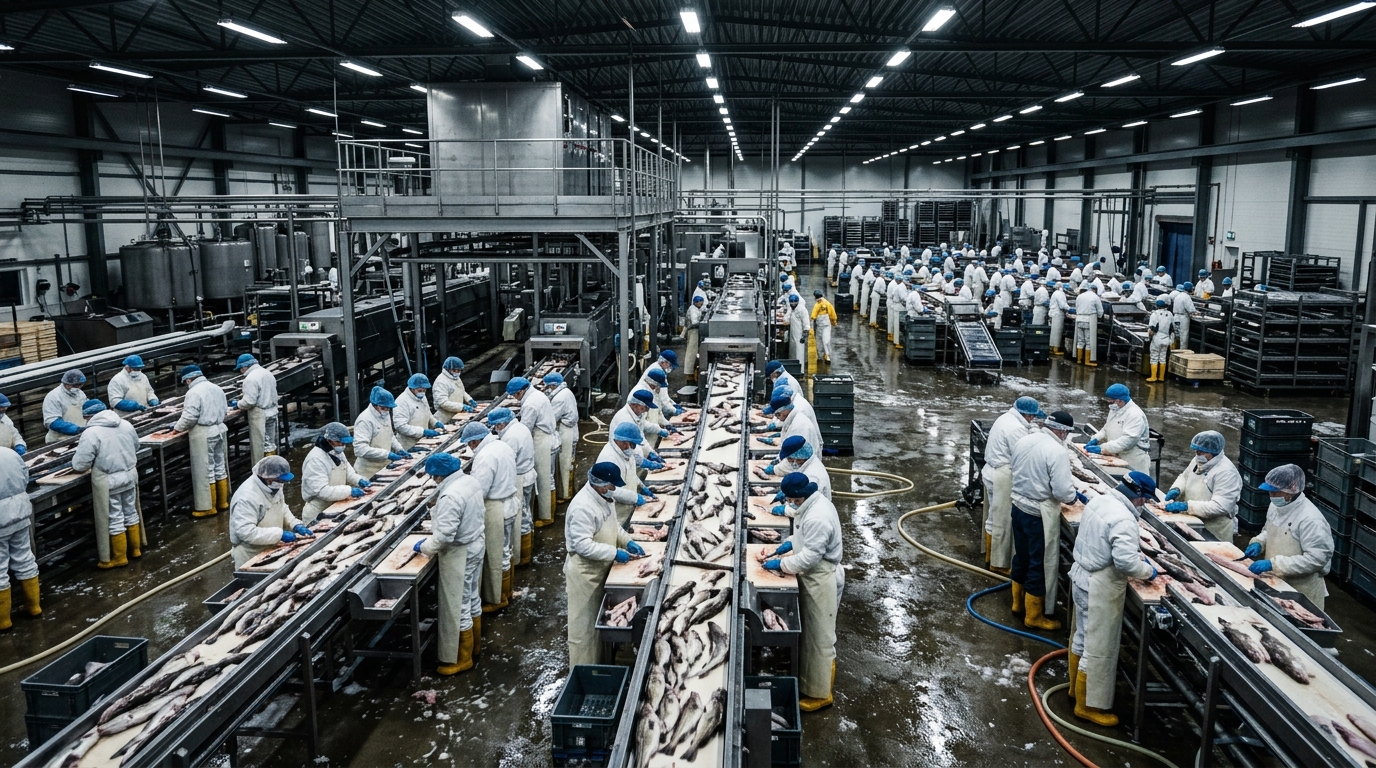
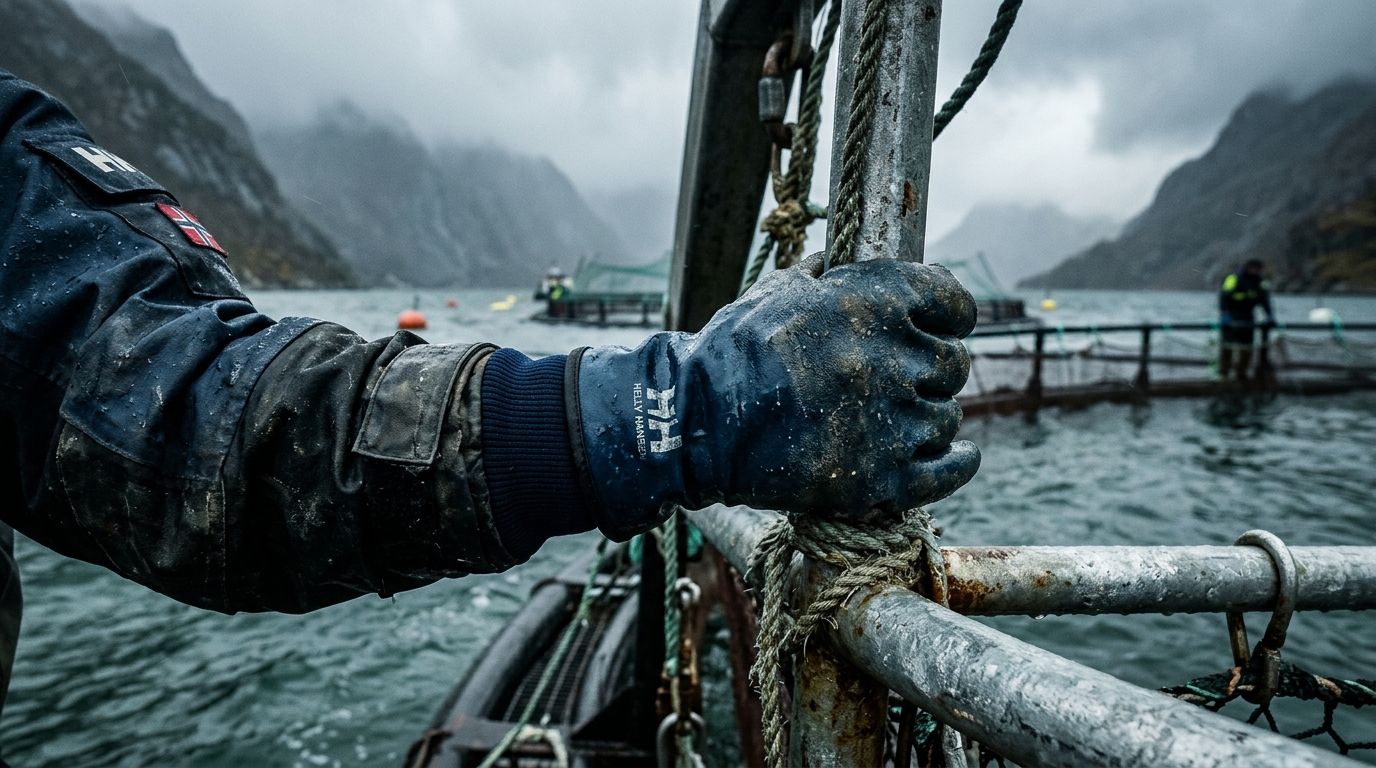
The most consistent finding in workplace health research on Norwegian aquaculture is one that most operational leaders have never seen framed as a financial question.
Research published through Norwegian Institute of Occupational Health (STAMI) and documented in multiple seafood industry studies shows that musculoskeletal complaints are the most frequently reported health issue among Norwegian fish farm and processing workers. Neck and shoulder pain. Back pain. Wrist and hand problems. Knee and hip strain. In cross-sectional surveys, more than half of workers in these environments report concerns about whether their work conditions are affecting their long-term health.
That is not an abstract welfare statistic. It is a description of your workforce.
What the cost actually looks like
The financial impact of musculoskeletal disorders in industrial workplaces runs across several lines that rarely get aggregated. Most operations see individual components but not the full picture.
Sickness absence. Musculoskeletal conditions are consistently among the top two causes of short and long-term sickness absence in Norwegian industry. The Norwegian Labour and Welfare Administration (NAV) data places musculoskeletal and connective tissue disorders as the largest single category of work-related sick leave. In a physically demanding industry with tight shift coverage, one absence creates a cascade. The shift still needs to run. Other workers cover it. Overtime costs accumulate. Fatigue in covering workers increases their own injury risk.
Reduced capacity before formal absence. Presenteeism, working while physically compromised, is harder to measure but well-documented as a significant productivity cost. Workers managing chronic joint pain or early-stage repetitive strain do not produce at the same rate or quality as workers who are not. They also make more errors. In aquaculture contexts where lice counts, biomass assessment, net inspection, and feed calibration require precision and physical endurance, this matters operationally.
Turnover and recruitment. Workers who develop chronic musculoskeletal conditions leave the industry earlier. In some cases, the condition forces the exit. Replacing an experienced aquaculture technician or senior farm operator is expensive on multiple dimensions: direct recruitment cost, the time required to build operational competence, and the loss of site-specific knowledge. Norwegian aquaculture faces a documented skills retention challenge in several regions. Physical health problems are one of the drivers.
Insurance, compensation, and regulatory exposure. Work-related musculoskeletal injuries create employer liability. The extent depends on how the condition is documented and whether it can be linked to occupational exposure. As Norwegian and EU workplace health regulation becomes more precise in its reporting requirements, operations without documented prevention programs face greater exposure than those with them.
Why cold environments specifically
The Tromsø Study, a major longitudinal health study following Norwegian populations over years, examined the relationship between cold working environments and musculoskeletal complaints. Workers spending 25 percent or more of their working time in cold conditions showed a significantly higher rate of musculoskeletal complaints years later than workers in temperate environments.
Cold exposure is not just uncomfortable. It changes the physiological conditions under which joints and muscles operate. Circulation to the extremities is reduced. Synovial fluid thickens. Muscle tissue loses elasticity and transfers more mechanical load directly to joints rather than absorbing it. In an environment like a Norwegian fish farm in autumn and winter, or a processing floor running at 4 degrees year-round, these are not edge conditions. They are the baseline.
Add repetitive motion to that baseline and the risk compounds. The academic literature on repetitive work in cold environments identifies the wrist, hand, shoulder, and knee as the primary sites of cumulative damage. These are exactly the joints under the greatest load in harvest operations, net handling, processing, and logistics work.
What prevention programs actually cost versus what they save
The business case for structured prevention programs in physically demanding industries has been examined in several Norwegian and Scandinavian contexts. The figures vary by study and operation type, but the consistent finding is that prevention returns more than it costs, often significantly.
A 2019 review of workplace musculoskeletal prevention programs in Nordic countries found cost-benefit ratios ranging from 1.2 to 4.1, meaning every unit of investment in prevention returned between 1.2 and 4.1 units in reduced absence and productivity costs. The variance depends largely on how well the program matches the specific physical demands of the job, how consistently it is applied, and how early in the worker's career it begins.
The programs with the strongest returns share a common structure. Targeted physical conditioning mirrors the actual demands of the work. Regular movement and joint mobility practice sits in or around the shift pattern. Cold weather protocols are operationally practical rather than theoretical. Health monitoring identifies early-stage problems before they become chronic.
None of this is complicated. None of it requires significant infrastructure. The barrier is almost never cost. It is the absence of a structured approach and someone who understands both the physical demands of the industry and the research behind what actually prevents long-term joint damage.
The honest question for operations leaders
If a significant portion of your current workforce develops chronic joint conditions in their 40s and 50s, where do the costs land? Some of them land on the worker and the health system. But a meaningful share, in the form of turnover, lost expertise, and reduced productivity over the period of decline, lands on the operation.
The question is not whether prevention programs are a good idea. The research makes that clear. The question is whether your operation is currently doing anything structured to reduce the risk that is accumulating in your workforce with every cold shift.
For most Norwegian aquaculture operations, the honest answer is no. That is a solvable problem. The worker-facing piece covers the biological mechanics in plain language. Understanding what is happening to the body is the starting point for building the business case to address it.